
Disclosure: As an Amazon Associate I earn from qualifying purchases. How this site works
Hoop Earring Size Guide
Hoop measurements help you compare appearance and usable space. Confirm inner and outer diameter, post size and the fit of an existing healed piercing before buying.
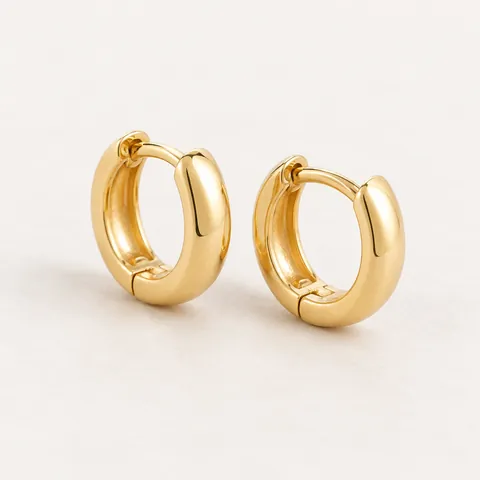 Gold huggie hoops
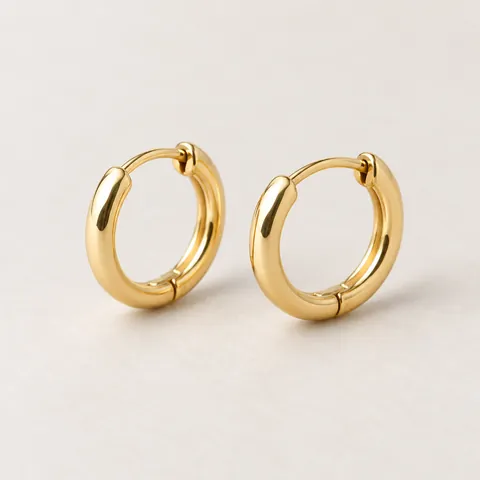 Small gold hoops
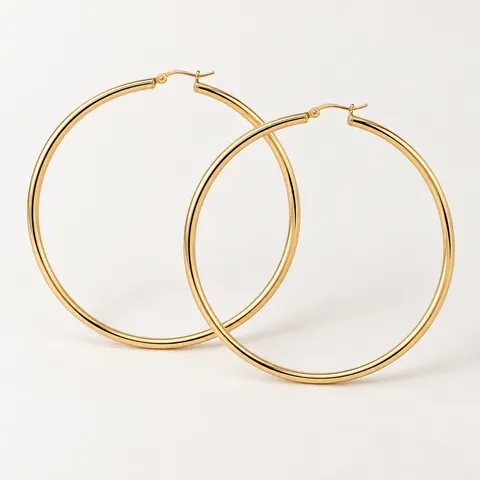 Large gold hoops
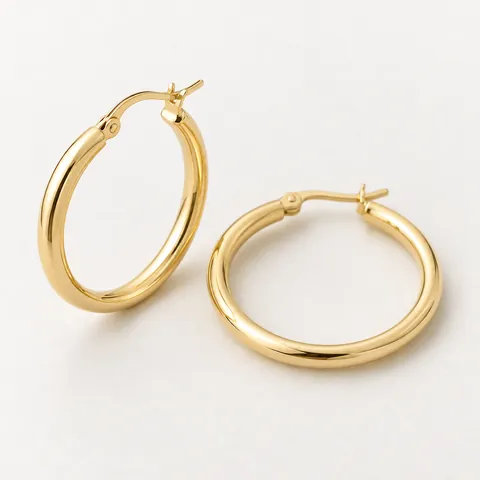 14k solid gold hoops
Measuring a hoop
- Diameter — check whether the seller means inner or outer width in millimetres.
- Inner diameter — matters for huggies: it must fit around your lobe or cartilage.
- Thickness — the width of the tube or wire, often 1–5 mm.
- Post size — compare the exact gauge or millimetre measurement with jewelry that fits; do not infer it from hoop diameter.
Use a millimetre ruler and the seller’s measurement diagram; photographs are not to scale.
Fit questions before choosing
- Is the listed diameter internal or external?
- What is the post diameter or gauge, and which components touch skin?
- Does the hoop clear the lobe without pressure, and does the closure match your needs?
- Is the piercing fully healed? For new or healing piercings, have a professional piercer select the jewelry.
There is no universal diameter for a lobe or cartilage location. Compare huggie hoops only after confirming the actual measurements.
Choosing by occasion
- Work and every day: 12–25 mm, thin to medium thickness.
- Evening and events: 30–50 mm or a thicker profile.
- Sport and sleep: do not assume a style is appropriate; check activity rules and individual fit guidance.
- Travel: one medium pair that works with everything.
For bigger looks, compare large gold hoops and check the listed weight.
What hoop diameter looks like on the ear
Diameter changes the style more than any other measurement. A 2 mm difference can matter on a huggie, while a 5 mm difference is usually more noticeable on medium and large hoops. Use the chart below as a visual starting point, then adjust for your lobe size, piercing placement, neck length, and hair style.
| Outside diameter | How it usually looks | Best use |
|---|---|---|
| 6–8 mm | Very snug on many ears; often too tight for thick lobes unless the piercing is close to the edge | Very small decorative profile; no piercing-fit recommendation |
| 9–12 mm | Close to the lobe with a small opening below the ear | Huggies, second holes, understated daily wear |
| 13–20 mm | Small hoop that reads as visible but not large | Everyday lobe hoops, office wear, layered piercings |
| 21–30 mm | Classic medium hoop, often around the lower cheek or jaw area depending on your ear | One-pair wardrobe choice, casual to dressy outfits |
| 31–45 mm | Noticeable hoop with more movement | Statement everyday looks, pulled-back hair |
| 46 mm and up | Bold hoop that may brush hair, collars, or the side of the neck | Occasional wear if you do not want much weight or movement every day |
The chart describes appearance only. Confirm actual inner diameter and post measurements against jewelry that fits your healed piercing; do not choose a smaller size if it creates pressure. Compare small gold hoops after checking the seller’s dimensions.
How to measure for huggie hoops at home
For huggies, the key number is inner diameter, not outside diameter. The hoop has to clear the distance from your piercing hole to the bottom or outer edge of the ear, with a little room so it does not pinch.
- Wash your hands and stand in good light with a mirror.
- Place a thin strip of paper, a soft measuring tape, or a piece of string from the piercing hole to the edge of the lobe in the direction the hoop will hang.
- Mark the distance and measure it in millimeters with a ruler.
- Allow comfortable clearance using the seller’s measurement guide; a fixed added distance is not suitable for every ear or hoop shape.
- Check the product listing for inner diameter. If the listing gives only outside diameter, subtract the tube thickness twice to estimate the inner space. For example, a 12 mm hoop with a 2 mm tube has roughly 8 mm of inner diameter.
Do not force a huggie closed if it presses into the lobe. A hoop that is too tight can feel fine at first and become sore after several hours. If you are shopping for cartilage piercings, healing piercings, or an unusually placed hole, use your piercer’s measurement rather than guessing. For close-fit lobe styles, gold huggie hoops are the category to compare.
How thickness, shape, and weight change the fit
Two hoops can have the same diameter but feel completely different. A thin wire hoop looks delicate and usually feels lighter, while a thick tube hoop looks bolder and takes up more visual space on the face. Thickness also reduces the inner opening on huggies, so a chunky 12 mm huggie may fit smaller than a slim 12 mm huggie.
Common tube shapes include round, flat, oval, and square-edge profiles. Round tubes look classic from every angle. Flat or wide profiles show more gold from the front but may feel more noticeable against the neck or jaw. Twisted, ridged, or textured hoops catch light well, but the texture can snag fine hair more easily than a smooth polished hoop.
- For all-day comfort, check the listed weight per pair when the merchant provides it.
- For larger diameters, hollow construction can reduce weight, but hollow hoops may dent more easily than solid wire or solid tube styles.
- For sensitive ears, look for clear metal descriptions such as 14k solid gold, 18k gold, gold vermeil, or gold-plated base metal. These are not the same thing.
- If you want gold jewelry you can wear often without worrying about plating wear, compare 14k solid gold hoops.
- If your earlobes tilt downward in photos, try a smaller diameter, a lighter tube, or a supportive earring back when the design allows it.
The closure also affects comfort. Hinged huggies are convenient because the post clicks into the hoop, but the hinge must align cleanly. Latch-back hoops are common on medium and large sizes and should close with light pressure, not bending. Endless hoops look minimal, but they can be harder to insert because one end slides into the hollow tube.
How to choose hoops for your ear shape and styling
Your best size depends on where the piercing sits. A low piercing can make the same hoop hang farther down, while a higher piercing can make it look tighter. Thick lobes need more inner space than thin lobes. If your two ears are slightly different, choose the size that fits the tighter side.
Face shape is a style preference, not a rule. Small hoops keep attention near the ear. Medium hoops add width and movement without taking over. Large hoops frame the face and stand out more with short hair, slicked-back hair, or updos. If you wear glasses, test whether the hoop hits the temple arm when you turn your head.
Think about your routine before choosing a diameter:
- If you use over-ear headphones, small hoops or huggies are less likely to press behind the ear cup.
- If you have long or curly hair, smooth rounded hoops are easier to remove than textured hoops.
- If you hold a phone tightly against your ear, very large or thick hoops may get in the way.
- If you wear scarves, high collars, or winter coats, medium hoops can catch less often than long statement hoops.
- If you layer piercings, keep the smallest hoop closest to the top of the ear or use graduated sizes so the hoops do not overlap.
A simple way to plan a stack is to choose one main hoop for the first lobe, then make each higher piercing smaller or closer-fitting. Mixing thickness can also work: for example, a medium thin hoop in the first hole and a thicker huggie in the second hole. Keep metal color and finish consistent if you want the stack to look intentional.
Frequently asked questions
What is the most versatile hoop earring size?
A medium-small hoop is usually the most versatile because it is visible but not distracting. If you want one pair for work, weekends, and travel, start in the range that clears your lobe comfortably without brushing your neck or collar.
Should hoop earrings be measured inside or outside?
Standard hoop diameter is usually the outside width across the hoop. For huggies and cartilage hoops, inner diameter is more important because it tells you how much space your ear has inside the hoop. Always read which measurement the seller is using before comparing sizes.
Why do the same size hoops look different on different people?
Piercing placement, lobe thickness, ear size, and face proportions all change how a hoop sits. A 20 mm hoop may look close and neat on one person but more dramatic on someone with a smaller ear or lower piercing.
Are thick hoops always heavier than thin hoops?
Not always. A thick hollow hoop can weigh less than a smaller solid hoop, while a thick solid hoop can feel heavy quickly. Check construction and listed weight when available, especially for larger diameters.
Can I sleep in hoop earrings?
Do not assume a huggie or click closure is suitable for sleep. Fit and movement vary; follow the specific jewelry guidance and your piercer’s advice for any healing piercing.
Disclosure: As an Amazon Associate I earn from qualifying purchases. This site may earn a commission when you buy through its links, at no extra cost to you. Product details come from public manufacturer information; always check the merchant page for current specifications and prices. We have not hands-on tested the products described here.